
Silicon Carbide Kiln Car Structures
IPS Ceramics designs, manufacturers, delivers and installs a range of bespoke modular systems.
Our system are designed to carry ware through a kiln or furnace during heat treatments. They are modular systems that are endlessly customisable. The components of a Kiln Car Structure are all available to be individually ordered.
- Specified for applications involving heavy weights and high temperatures
- We also sell the individual components of a Kiln Car
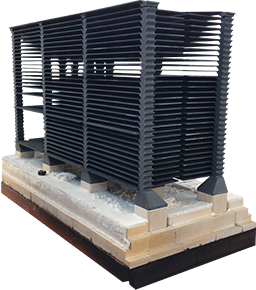
General Overview
Kiln Car Structures are used by a range of industries (including tableware and sanitaryware) to support products within a kiln or furnace during heat treatment. Individual items of kiln furniture are built into full systems capable of efficiently transporting multiple items in and out of a kiln or furnace. Silicon Carbide Kiln Cars are often used in applications which involve higher temperatures or weights than other materials could manage, or in applications designed to reduce mass, save on energy consumption, and increase output compared to previous kiln car setups.
Kiln Cars are modular systems built out of multiple components. IPS Ceramics has both an expert design/technical team and a robust manufacturing base, meaning that we are perfectly positioned to design, develop, manufacture, and install bespoke Silicon Carbide Kiln Cars.
We also sell the individual components of a Kiln Car system, and can support a Kiln Car throughout its entire service life by providing spare and replacement parts for it, whether we were the original manufacturers of the Kiln Car or not.
Silicon Carbide Variations
| Typical Physical Properties | |||||
| SiSiC/RBSiC (Silicon Infiltrated) | NSiC (Fine Nitride Bonded) | NSiC (Coarse Nitride Bonded) | Sintered (SSiC) | Recrystalised (RSiC) | |
| Max Usage Temp. | 1350 °C / 2450 °F | 1450 °C / 2650 °F | 1450 °C / 2650 °F | 1600 °C / 2900 °F | 1650 °C / 3000 °F |
| Bulk Density | 3.1 g/cm³ | 2.8 g/cm³ | 2.7 g/cm³ | 3.1 g/cm³ | 2.7 g/cm³ |
| Open Porosity | < 0.5 % | 13 % | 15 % | < 0.5 % | 15 % |
| MoR @ Room Temp. | 250 MPa | 160 MPa | 35 MPa | 400 MPa | 90 MPa |
| Thermal Conductivity | 45 W/mK | 15 W/mK | 15 W/mK | 70 W/mK | 25 W/mK |
| Thermal Expansion 20-1000°C | 4.5 x10⁻⁶/K | 4.7 x10⁻⁶/K | 4.7 x10⁻⁶/K | 4.0 x10⁻⁶/K | 4.8 x10⁻⁶/K |
| Composition | |||||
| SiC | > 90 % | 75 % | 70 % | > 99 % | > 99 % |
| Si (Metal) | 10 % | — | — | — | — |
| Si3N4 | — | 25 % | 20 % | — | — |
Gallery
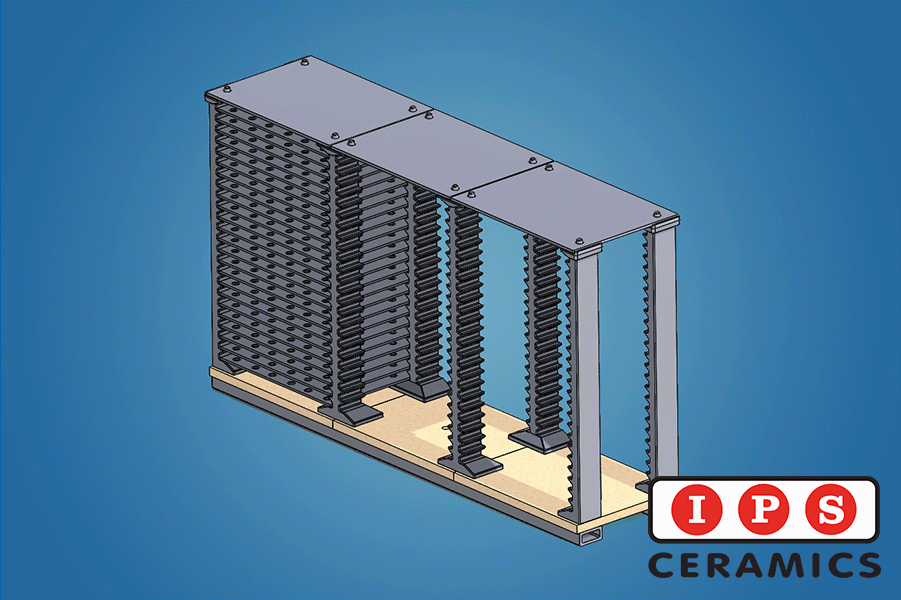
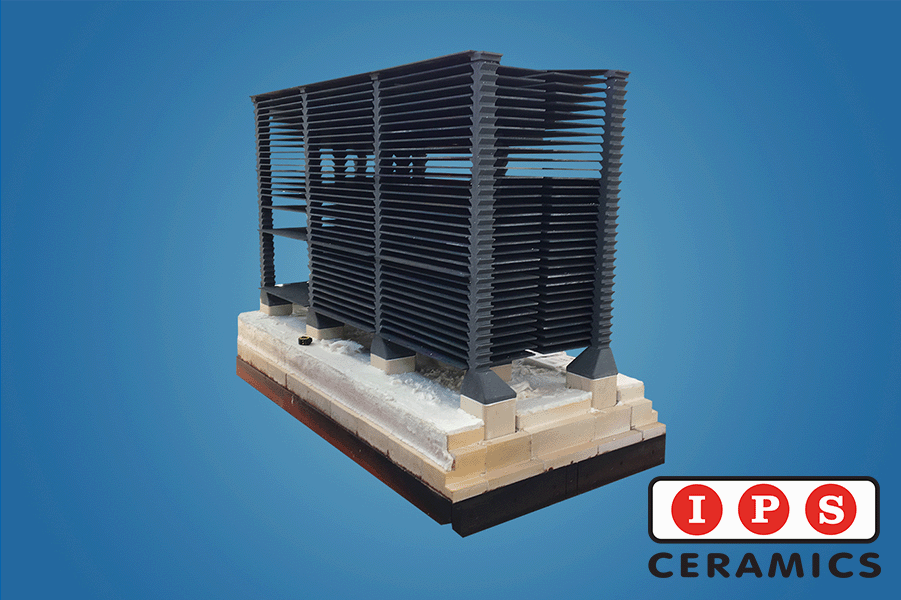
Common Components of a Silicon Carbide Kiln Car Structure
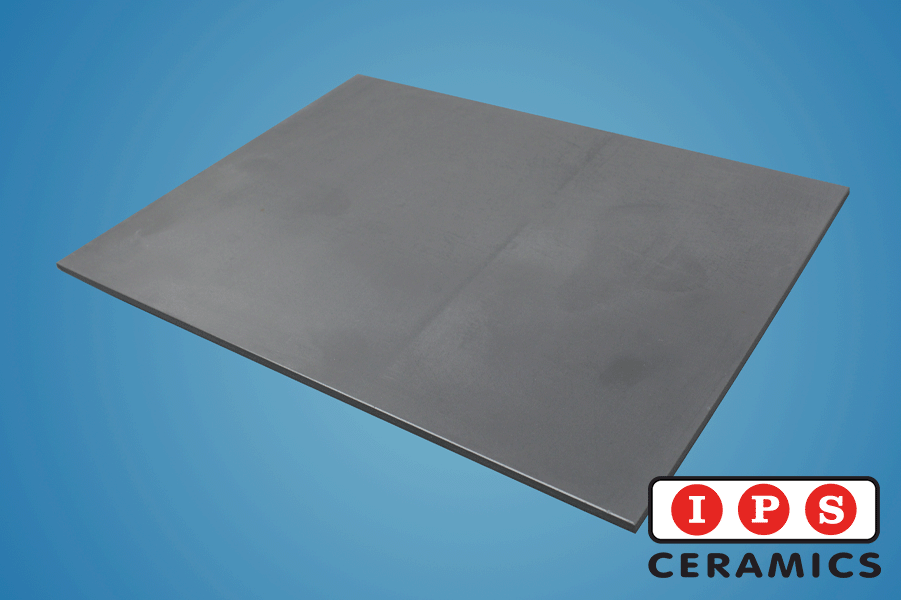
Silicon Carbide Batts, Plates, Tiles and Shelves
In applications involving high temperatures or heavy product loading, SiC batts are often the best choice. They can be made much thinner than cordierite or mullite batts, reaching thicknesses of only 6-10mm. Batts can be manufactured in either nitride-bonded SiC (suitable for applications up to 400 °C / 2552 ºF) or recrystallised SiC materials (suitable for applications up to 1600 °C / 2912 ºF).
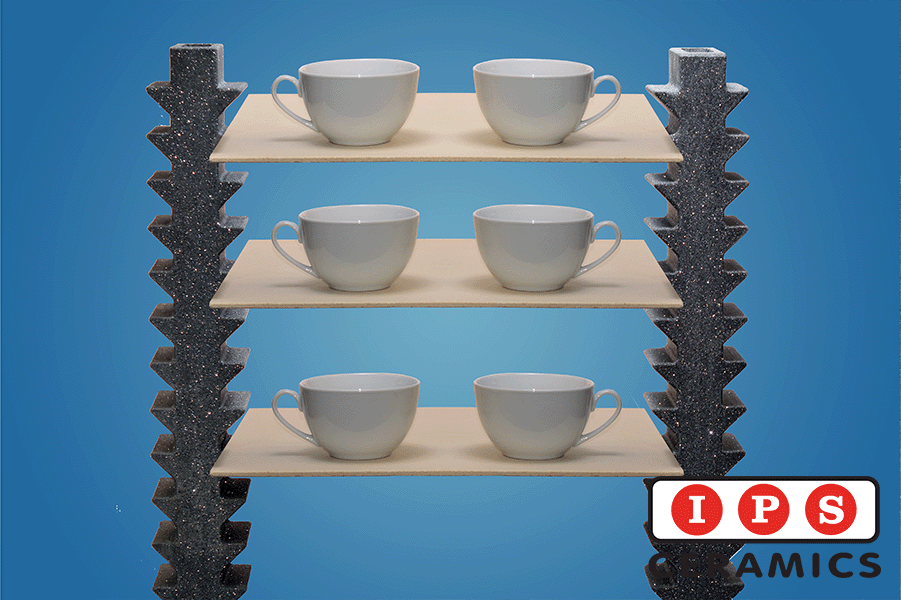
Silicon Carbide Adjustable Props and Posts
One-piece adjustable props can be manufactured to suit individual production requirements; prop lengths up to 2000mm are possible and teeth spacing can be tailored to your requirements. The result is a system that provides maximum flexibility in shelf / batt placement within the kiln. Props are manufactured in ReSiC allowing use in high temperature firings (up to 1600 °C / 2912 ºF).
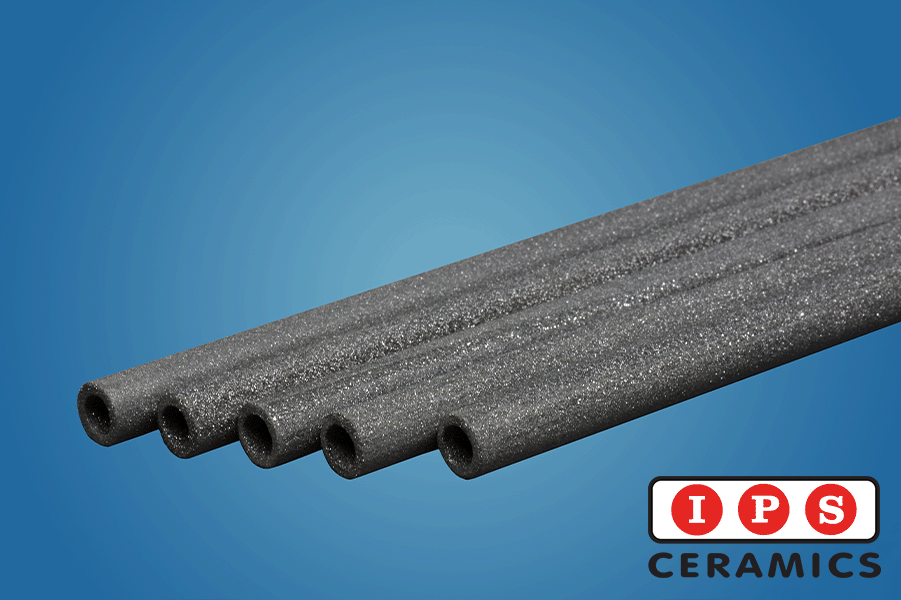
Ceramic tubes can be manufactured in lengths up to 3000mm, with diameters and wall-thickness tailored to your specific loads.
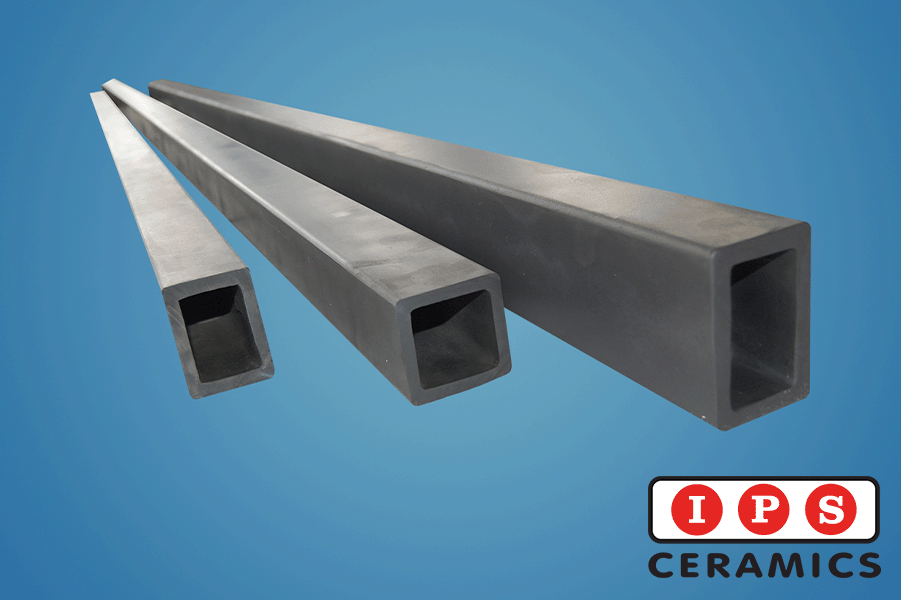
SiSiC beams are used extensively as supports in kiln and furnace construction, and as part of kiln furniture structures. The material has superb strength and creep resistance, allowing beams to span across larger distances in your kiln car structure. Cross-sections from 20 x 20mm to 100 x 100mm are possible, allowing beams to be matched to individual conditions. SiSiC beams are generally unaffected by common kiln atmospheres and typically provide several years of service.
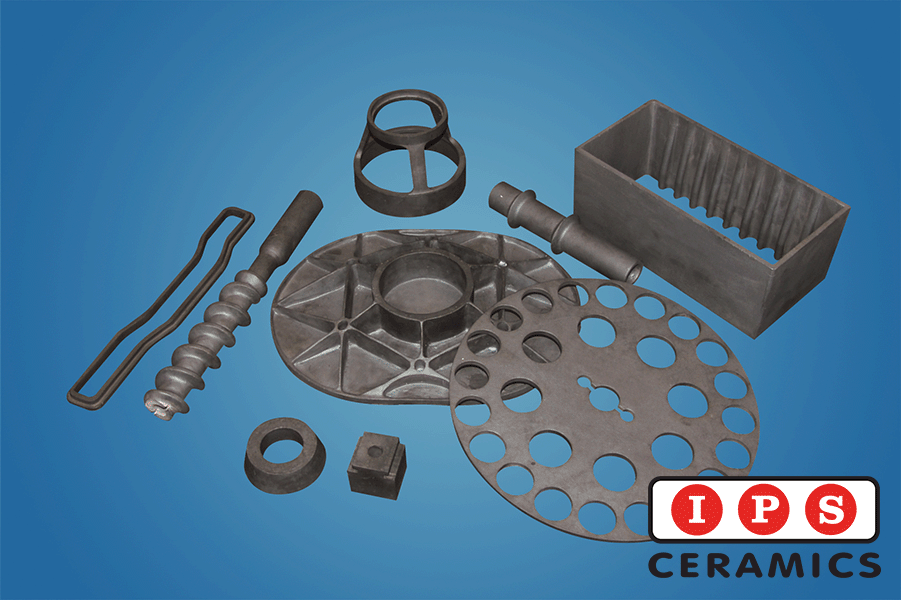
Bespoke Silicon Carbide Shapes
IPS Ceramics is happy to work with customers to design bespoke shapes. Slip-casting allows complex shapes and thin walls to be produced to suit your specific needs. Recent examples include burner-flame deflectors and adjustable post feet.
This process is very cost-effective, making small order quantities practical.